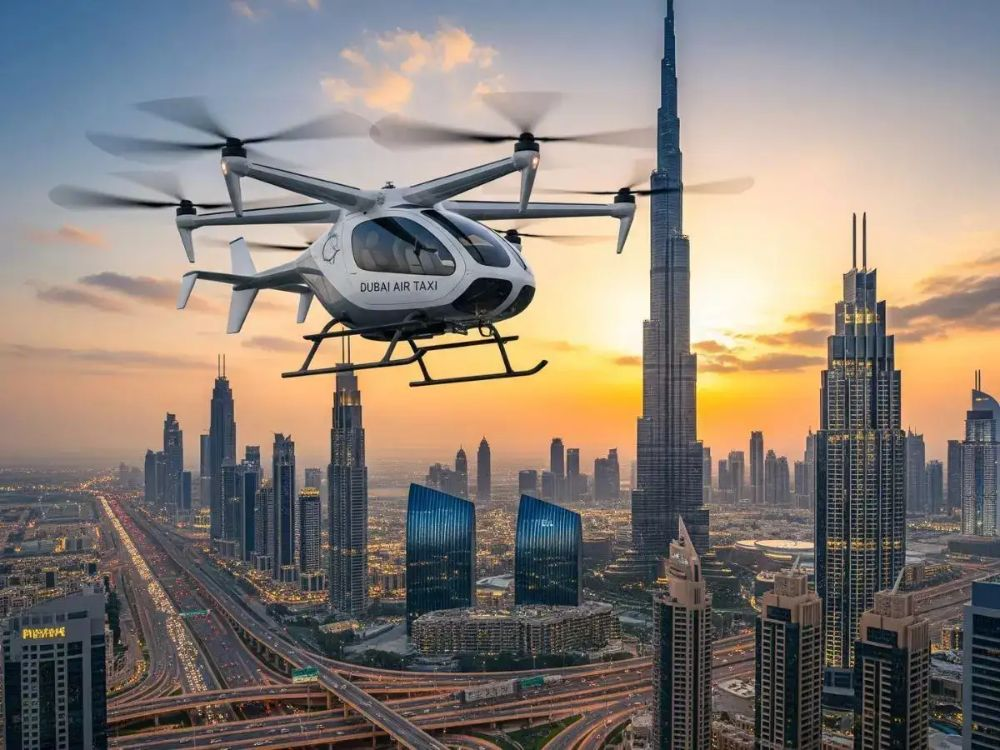
Why the UAE is Leading the Air Taxi Revolution
The UAE has consistently invested in transformative projects from the world’s tallest tower to hyperloop studies and now, it’s set to reshape air travel. Unlike many countries that are still experimenting with concepts, the UAE has:
•National regulations already in effect for electric vertical takeoff and landing (eVTOL) aircraft.
•A government-backed roadmap for advanced air mobility (AAM).
•Strategic plans to convert over 70 helipads into hybrid infrastructure, ensuring coverage across major cities.
By being the first country in the world to publish a regulatory framework for hybrid operations, the UAE demonstrates not just ambition but readiness.
Vertiports Driving UAE Air Taxi Launch 2025
One of the most exciting developments is the Dubai International Vertiport (DXV), the flagship facility being built near Dubai International Airport. Designed as the hub of this new transport era, it features:
•Three stories of passenger facilities.
•Capacity to handle 170,000 passengers annually.
•Two landing pads, capable of supporting both helicopters and eVTOL aircraft.
•An initial launch target of Q1 2026, shortly after the UAE air taxi launch 2025.
According to GCAA officials, the foundation work is complete, with parking and landing infrastructure now under development. This vertiport is expected to be the benchmark model for others to follow.
Expanding the Network: Palm Jumeirah, Downtown, and Marina
DXV is only the beginning. The UAE plans to build three more vertiports across Dubai:
•Palm Jumeirah: catering to luxury tourism and residents.
•Downtown Dubai
:connecting business and leisure hubs.
•Dubai Marina: offering quick access for commuters and visitors alike.
This expansion ensures that air taxis won’t just be a novelty, they’ll be a practical part of city life, reducing congestion and connecting high-demand areas.
Test Flights in the UAE: Proven in Extreme Conditions
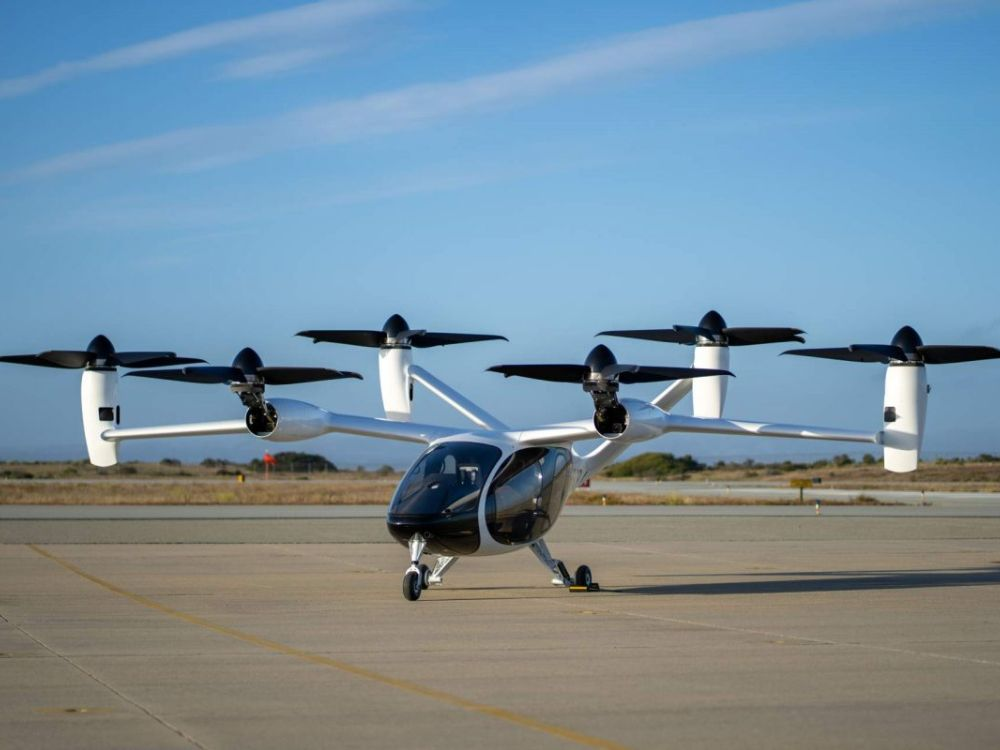
Global leaders in air taxi technology, including Joby Aviation and Archer Aviation, have already conducted successful test flights in Dubai and Abu Dhabi. These trials exposed aircraft to the UAE’s intense heat and humidity, ensuring safety and performance before rollout.
The GCAA is also preparing to issue Type Certificates for approved aircraft models, including one designed by a UAE-based manufacturer. By certifying these aircraft domestically, the UAE strengthens its position as a global aviation hub.
World’s First National eVTOL Regulations
One of the biggest milestones is regulatory. The UAE is the first nation to develop a comprehensive regulatory framework for eVTOL and hybrid operations.
This approach allows:
•Traditional helicopters and eVTOLs to share the same infrastructure.
•Hospitals and institutions to convert existing heliports into hybrid landing zones.
•Faster and more cost-effective deployment of advanced air mobility.
These forward-thinking regulations are a major reason the UAE air taxi launch 2025 is progressing faster than in the US, Europe, or Asia.
Travel Time Benefits of UAE Air Taxi Launch 2025
One of the most compelling advantages is time. Imagine:
•Dubai International Airport (DXV) to Dubai Marina → normally 45 minutes by car.
•By air taxi → just 15–18 minutes.
This level of efficiency transforms not only tourism and business travel but also daily commutes. The initial routes will operate on fixed schedules and pre-bookings, but future expansion envisions on-demand air mobility, integrated with public transport systems.
Beyond Transport: Impact on Real Estate, Tourism, and Lifestyle
The launch of eVTOL services will influence more than just mobility:
•Real Estate: Communities near vertiports, like Dubai South and Dubai Marina, could see increased property demand and rising values.
•Tourism: Offering futuristic city tours via air taxi gives Dubai and Abu Dhabi a new global attraction.
•Lifestyle: Residents will enjoy reduced commute stress, boosting productivity and leisure time.
Much like the Dubai Metro once reshaped urban living, air taxis are expected to bring a new wave of transformation.
Challenges on the Horizon
While the UAE is pushing ahead, challenges remain:
•Public trust: Convincing residents to fly in small electric aircraft.
•Pricing: Initial services may target premium customers before scaling down.
•Infrastructure demand: Building vertiports at the pace required for wide adoption.
Still, with government support and global partnerships, these challenges appear manageable.
Global Race: How the UAE Stands Out
Other nations like the US, Japan, and China are exploring eVTOL technology, but the UAE stands apart because it has:
•Operational test flights completed.
•Regulations published and active.
•Vertiports under construction.
This combination gives the UAE a first-mover advantage, ensuring it becomes a model for other countries looking to adopt air taxis.
Conclusion: A New Era of Urban Flight
The UAE air taxi launch 2025 marks more than a technological milestone, it’s a redefinition of urban living. From Dubai to Abu Dhabi, the coming network of vertiports and certified aircraft will reshape how people move, invest, and experience the country.
As officials emphasize, this is not a distant dream but an imminent reality. By Q1 2026, the UAE could be the first country where air taxis are a normal part of daily life.