
UAE University Announces Readiness for Launch of Arab Satellite ‘813’
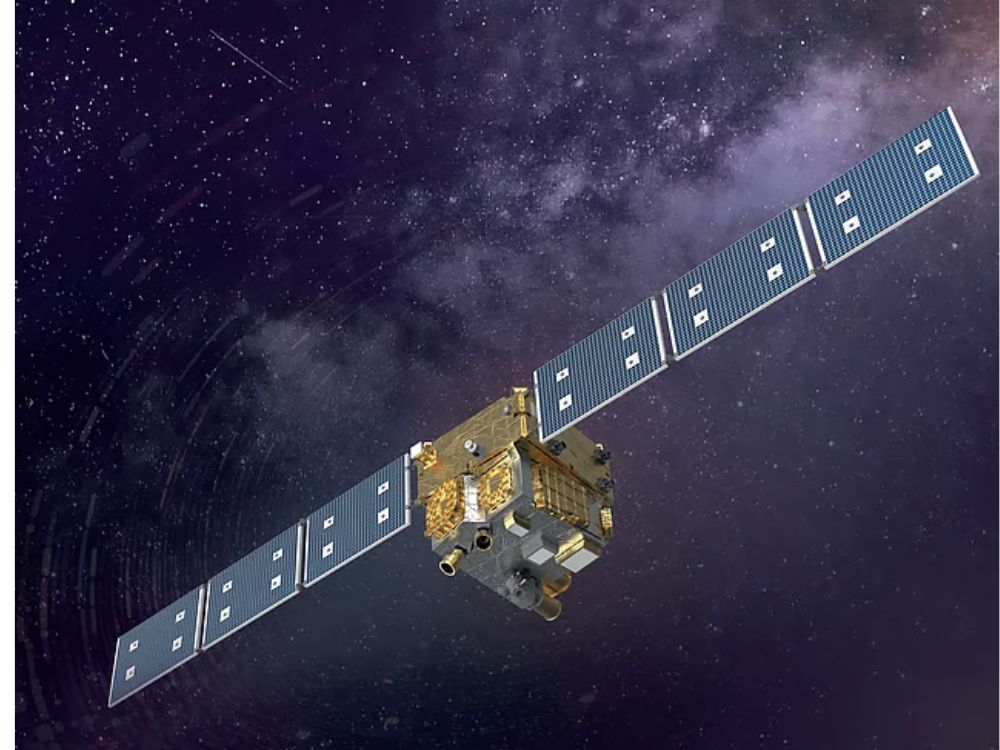
Arab Satellite 813: The UAE University (UAEU) has announced its complete readiness for the launch of the Arab Satellite 813, a groundbreaking initiative that embodies the spirit of Arab scientific unity and innovation. Expected to launch in 2025, the project represents one of the most ambitious collaborative efforts in the region’s space exploration journey. The satellite, developed under the supervision of the UAE Space Agency, will play a critical role in environmental monitoring, data collection, and climate research across Arab nations.
The readiness announcement by UAE University underscores the nation’s ongoing commitment to positioning itself as a regional leader in space science and technology. The Arab Satellite 813 project will not only strengthen regional cooperation but also accelerate the UAE’s vision of developing sustainable and knowledge-based industries.
A Symbol of Arab Unity Through Science
The name ‘813’ holds historical significance, inspired by the year 813 AD, a golden age for the House of Wisdom in Baghdad, where scholars from across the Arab world contributed to advancements in astronomy, mathematics, and engineering. In many ways, the Arab Satellite 813 continues that legacy, representing a new age of scientific collaboration and cultural unity among Arab nations.
More than 11 Arab countries are part of this initiative, pooling their scientific and technical expertise under the UAE’s leadership. The satellite’s main mission is to observe Earth from orbit and collect valuable data on greenhouse gases, desertification, vegetation, and natural resources, all vital components for addressing climate challenges in the region.
UAE University’s Role in the Mission
The UAE University has played a central role in preparing for the successful deployment of Arab Satellite 813. Through its National Space Science and Technology Center (NSSTC), UAEU has been instrumental in developing the research framework, testing mechanisms, and satellite components. The center has also provided specialized training for Emirati and Arab scientists, ensuring that regional talent is well-equipped to manage and analyze data collected by the satellite once operational.
This academic participation aligns with the UAE’s broader strategy to bridge education and technology, creating an environment where universities are key contributors to national innovation goals. Students and researchers at UAEU have also been involved in simulation projects and testing exercises that prepare them for real-world space research and satellite management.
Driving Environmental and Scientific Progress
The Arab Satellite 813 is expected to revolutionize environmental monitoring across the Middle East. It will provide high-resolution imagery to track climate change, detect pollution, and study agricultural patterns. These insights will be shared among participating Arab nations to support sustainable development, disaster management, and resource planning.
In addition, the satellite’s data will assist scientists in understanding regional phenomena such as sandstorms, rising temperatures, and droughts, helping governments craft more effective policies for environmental resilience. This project reflects the UAE’s dedication to not only advancing space exploration but also addressing urgent global challenges through technology and cooperation.
Aligned with UAE’s Vision for Space and Innovation
The Arab Satellite 813 is part of the UAE’s larger roadmap for space innovation, which includes major milestones such as the Emirates Mars Mission (Hope Probe) and the Lunar Rover Rashid. These projects have firmly placed the UAE among the top nations investing in the future of space science and exploration.
With the Arab Satellite 813, the UAE extends that leadership to the entire Arab world, creating opportunities for knowledge sharing, innovation, and youth empowerment. It is an embodiment of the UAE’s Centennial 2071 vision, which aims to make the country a hub for scientific excellence, education, and sustainability.
Arab Satellite 813: Empowering the Next Generation
Beyond its technological achievements, this mission represents a new era of educational empowerment. The UAE University continues to develop advanced programs in aerospace engineering, artificial intelligence, and satellite technology. These initiatives prepare Emirati youth and Arab students to become future scientists, engineers, and leaders in the region’s growing space sector.
By investing in education and research, the UAE is ensuring that Arab Satellite 813 becomes a source of long-term benefits nurturing regional expertise that will continue to push boundaries in space and environmental science.
Official Sources:
UAE Space Agency – Arab Satellite 813 Project
UAE University – National Space Science and Technology Center
Conclusion
The readiness of UAE University for the Arab Satellite 813 launch marks a defining milestone in the UAE’s journey toward becoming a regional and global leader in space innovation. It’s not just a technological mission, it’s a message of unity, progress, and hope for the Arab world.
By combining science, education, and collaboration, the UAE continues to demonstrate that its commitment to innovation goes far beyond borders, inspiring the next generation to reach for the stars quite literally.
Follow UAE Explores for more Science related News & Updates.